
The Fading Footsteps: The Declining Christian Presence in the Holy Land
"Overall, in Palestinian territories, Christians have dropped from 15% in 1950 to 2% today."
NEWSPOLITICSRELIGION
t.furgeson
2/5/20264 min read
The Holy Land, a region steeped in biblical history and revered as the cradle of Christianity, is witnessing a quiet exodus. For centuries, Christian communities have thrived here, tracing their roots back to the time of Jesus Christ. From the bustling streets of Bethlehem to the ancient churches of Jerusalem, these groups have preserved sacred sites and traditions. Yet, today, their numbers are dwindling at an alarming rate. What was once a vibrant minority comprising 10-20% of the population in the early 20th century has shrunk to a mere 1-2%. This decline raises profound questions about the future of Christianity in its birthplace and the complex interplay of politics, economics, and religion driving it.
A Historical Tapestry Unraveling
Christianity's presence in the Holy Land dates back to the 1st century AD, with early followers establishing communities in places like Jerusalem, Nazareth, and Bethlehem. Under Byzantine rule, the region flourished as a Christian heartland, dotted with monasteries and pilgrimage sites. The Arab conquest in the 7th century introduced Islam, but Christians coexisted as a protected minority under the dhimmi system, paying taxes for religious freedom.
The 19th and early 20th centuries saw shifts under Ottoman rule, where Christians made up about 10.7% of the population in 1890. The establishment of Israel in 1948 and the subsequent Arab-Israeli conflicts marked turning points. In 1948, Christians accounted for around 10% of the Palestinian population. The 1967 Six-Day War and Israel's occupation of the West Bank and Gaza further altered demographics, leading to waves of emigration.
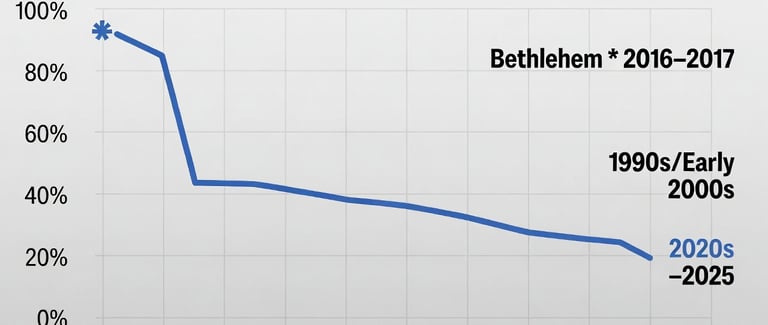
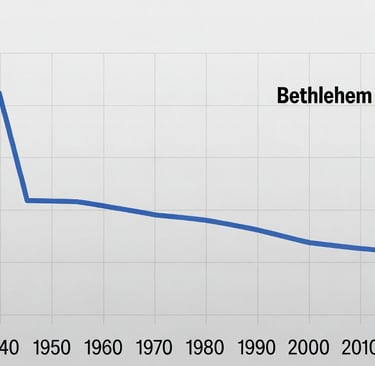
In Bethlehem, the birthplace of Jesus, Christians formed 86% of the population in 1950. By the time the Palestinian Authority (PA) took control in the 1990s under the Oslo Accords, numbers had already begun to fall. Similar patterns emerged in Gaza and Jerusalem, where Christians dropped from 20% to less than 2% of the population. This historical context underscores that the decline isn't sudden but a culmination of longstanding pressures.
Stark Statistics: A Population in Peril
Current data paints a grim picture. As of recent estimates, Christians constitute about 1-2% of the total population in Israel, the West Bank, and Gaza, totaling around 180,000-200,000 people. In Israel proper, there are approximately 130,000-154,000 Christians, many of whom are Arab Palestinians or immigrants from the former Soviet Union. Their numbers have remained relatively stable or even grown slightly due to immigration, but as a percentage, they hover at 2%.
The West Bank tells a different story. Here, the Christian population has plummeted from tens of thousands to about 30,000. Bethlehem's Christian majority has eroded to roughly 10%. In Gaza, under Hamas control since 2007, the community has halved from 5,000 to just over 1,000, exacerbated by ongoing conflicts. Overall, in Palestinian territories, Christians have dropped from 15% in 1950 to 2% today.
These figures, drawn from sources like the Latin Patriarchate of Jerusalem and Israeli government data, highlight a 90% decline in some areas under PA and Hamas rule. Emigration rates are high, particularly among youth, with unemployment in places like Jordan (which hosts many Palestinian Christians) reaching 53.5% for those aged 20-30.
The Multifaceted Causes of Decline
The reasons for this exodus are complex and contested, with blame often divided along political lines. Economic factors top the list. Political instability and poor job opportunities drive many to seek better lives abroad. In the West Bank, Israeli restrictions like checkpoints, permits, and land confiscations create a "despairing situation," leading to hopelessness. Surveys show "worsening economy" (26.4%) and "lack of freedom and security" (32.6%) as primary drivers.
Demographic trends exacerbate the issue. Christians have lower birth rates compared to Muslims, partly due to higher education levels and urban lifestyles. In Muslim-majority areas, polygamy and improved healthcare have boosted Muslim population growth.
Political and social pressures are equally significant. In PA-controlled areas, reports cite discrimination, violence, and coercion from Muslim extremists, including forced conversions and harassment. A 2024 study attributes a 90% decline to these factors, with weak law enforcement allowing impunity. In Gaza, the Hamas takeover intensified this, halving the Christian population.
Conversely, Christian leaders in Jerusalem blame Israeli policies, including "ethnic cleansing, apartheid, and genocide," for the decline. Aggression from radical Jewish settlers in Jerusalem has targeted churches and communities, contributing to a "war of attrition." The ongoing occupation, with its closures and residency restrictions, is seen as the root cause by many Palestinians.
Broader regional trends, like the rise of radical Islam across the Middle East, add pressure. Emigration is often to Western countries where Christians find cultural compatibility. Events like the Intifadas and recent Gaza conflicts have accelerated departures.
The Human and Cultural Impacts
This decline has ripple effects. Holy sites like the Church of the Nativity risk becoming museums without local custodians. Communities face fragmentation, with families separated by emigration. In Bethlehem, the loss of Christians diminishes the city's unique character, affecting tourism and economy.
Globally, it threatens the diversity of the Holy Land. As Father Francesco Patton warned, Christians are "at threat of extinction" without intervention. The exodus also fuels narratives of persecution, straining interfaith relations.
Glimmers of Hope and a Call to Action
Despite the gloom, some initiatives offer hope. Churches provide education and aid to stem emigration. International advocacy, like from the Vatican, highlights the plight. Peace efforts could stabilize the region, boosting economies.
Yet, without addressing root causes—occupation, extremism, and inequality—the trend may continue. Policymakers must prioritize minority protections, economic opportunities, and dialogue.
In conclusion, the declining Christian rate in the Holy Land is a tragedy unfolding in slow motion. From historical strongholds to fragile minorities, these communities embody resilience amid adversity. Preserving their presence isn't just about numbers; it's about safeguarding a shared heritage. As the world watches, the question remains: Will the footsteps of the faithful fade entirely, or can collective action revive them?